The Ultimate Guide To Air Conditioner Maintenance For Homeowners
-
Posted by
Your Air Conditioner serves you best when it is regularly maintained. Irreg...





Lagom is a wonderful Swedish word – but quite a universal notion …




A roof replacement is one of those projects that sounds straightforward until you start planning one. A crew shows up, the old shingles come off, new ones go on, the driveway gets cleaned. That’s the version from the outside. From inside the house, it’s a noisy, dusty, logistically interesting week that touches more of your life than you expect it to.
Edmonton adds its own layer of complexity. Between long winters, short shingle seasons, a freeze-thaw cycle that punishes every fastener, and the occasional hailstorm that arrives without warning, roofs here work harder than in most of the country. Planning a replacement with the local climate in mind, rather than around it, is the difference between a new roof that lasts its full lifespan and one that starts showing problems in year ten.
Here’s what the process actually looks like, from the first quote to the final cleanup.
Edmonton’s roofing season is effectively from late April through late October, with the sweet spot landing in late summer and early fall. Asphalt shingles need a certain minimum temperature to seal properly, and the adhesive strips on the back of each shingle rely on the sun’s heat to bond. Install too early in spring or too late in fall, and those seals may never form the way the manufacturer intended.
This matters because the difference between a roof that performs well for twenty years and one that starts lifting in the first serious wind often comes down to whether the shingles sealed during installation. Reputable local crews plan their schedules around the weather, not the other way around, which is why booking early in the season gives you better options.
The process usually starts with an on-site inspection. A good estimator walks the roof, checks the attic, looks at ventilation, measures the slopes, and documents any existing damage. The resulting quote should be itemized. Tear-off, underlayment, ice and water shield, flashing, shingles, ventilation, and labor should all appear as separate line items.
Quotes that come in as a single lump sum tell you less than you need to know. If one contractor is thousands cheaper than the others, the savings are almost always hidden in shortcuts on underlayment, flashing, or disposal. Ask to see the brand and product line of every material, not just the shingles.
Edmonton requires permits for certain roofing work, particularly where structural changes are involved. A licensed contractor handles this as a matter of routine. They also carry their own liability insurance and workers’ compensation coverage, both of which protect you if something goes wrong during the project.
Ask to see current copies of both documents before signing anything. A contractor who hesitates, who offers an expired certificate, or who suggests you can skip the permit to save money is giving you a preview of how the rest of the job will go.
The material conversation usually starts with asphalt shingles, because they’re the most common and most affordable option. Within that category, though, the range is wide. Basic three-tab shingles last the least time. Architectural shingles are thicker and more durable. Impact-rated shingles resist hail better and sometimes qualify for insurance discounts.
For homeowners willing to invest more upfront, metal roofing lasts forty to fifty years, handles snow loads well, and sheds ice naturally. It costs more and requires a specialized crew for installation. Cedar shakes offer a distinctive look but demand more maintenance than most homeowners want to provide in an Edmonton climate.
The material choice sets the ceiling for how long the roof will last. Everything else sets how close to that ceiling you actually get.
While the shingles are off is the ideal time to fix problems underneath. Attic ventilation that doesn’t meet current standards, insulation that has settled or been displaced, and ice and water shield that was missed on the original build can all be addressed during a replacement for a fraction of what they cost as separate projects.
According to the Canada Mortgage and Housing Corporation, balanced attic ventilation and proper insulation work together to keep roofs performing the way they’re supposed to. Skipping this step during a replacement means the new shingles will age on the same tired system that wore out the old ones. Experienced contractors offering Roof Replacements in Edmonton usually recommend an attic assessment as part of the quoting process, because fixing the underlying issues once is always cheaper than paying for their consequences twice.
Most Edmonton houses have their old roof torn off and the new roof installed in one to three days. The first day is the loudest. Crews start early to take advantage of cooler morning temperatures, shingles fly into the bin parked next to the house, and the whole property feels briefly chaotic.
Plan for it. Move vehicles off the driveway. Cover anything in the attic that could collect dust from vibration. Keep pets indoors and warn the kids that the noise is normal. If you work from home, consider booking a coworking day or an errand-heavy afternoon. The demolition is loud enough that video calls become difficult.
Once the shingles are off, the sheathing underneath is exposed for the first time in twenty years. Most of the time, it’s fine. Sometimes it isn’t. Soft spots, rot around vents or chimneys, and damage from old leaks all become visible only at this stage. A professional crew will photograph any issues, show them to you, and explain what they recommend before proceeding.
Contracts typically include a per-sheet price for replacing damaged plywood, which keeps the process transparent.
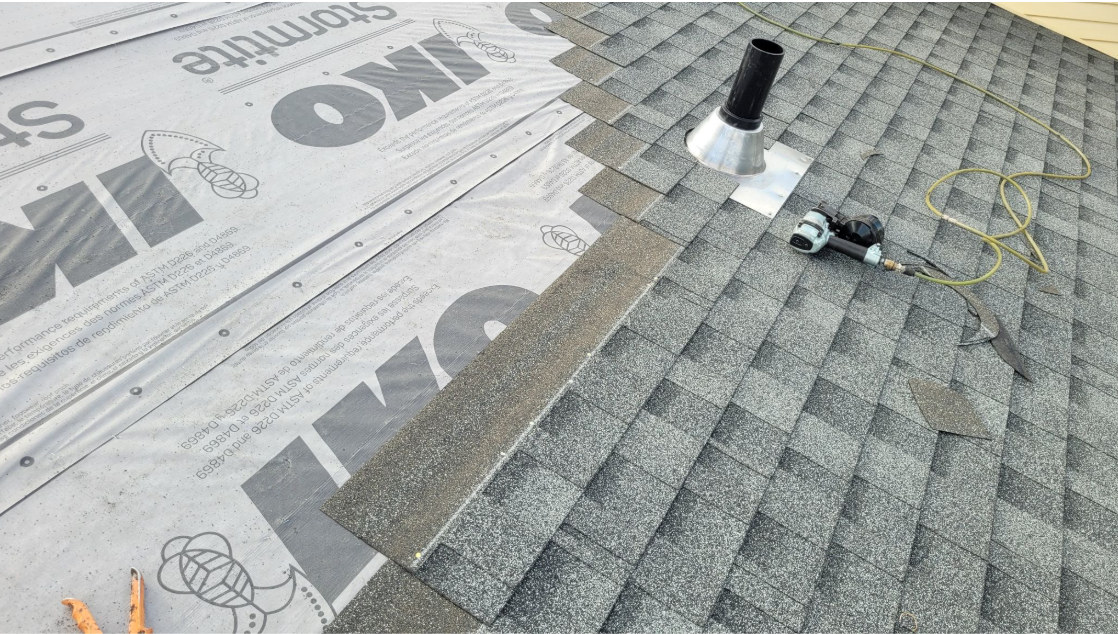
Once the deck is clean and repaired, ice and water shield goes down along the eaves, in the valleys, and around every penetration. Synthetic underlayment covers the rest of the roof. Starter strips, new flashing, and shingles follow. Ridge vents or other ventilation components get installed as the crew works up the slopes toward the peak.
A good crew treats the finishing details as carefully as the fieldwork. Straight shingle lines, consistent exposure, clean cuts around dormers and valleys, and properly sealed flashing around every penetration separate a professional install from a rushed one. These are the details you’ll see every time you pull into your driveway for the next two decades.
A proper cleanup includes a magnetic sweep of the yard, the driveway, and the street. Stray nails from a roofing project can puncture tires, injure pets, and sit in grass for months waiting to find bare feet. A reputable crew runs the magnetic roller multiple times, clears gutters and downspouts, and hauls every scrap of packaging off the property before leaving.
When the last bin pulls away, the new roof looks like it’s always been there. That’s the goal. Everything you’ll notice about the roof going forward should happen quietly, over years, as the rest of the house benefits from a solid top that does its job without complaint.