Smart Exterior Improvements for Lasting Family Comfort
-
Posted by
A home’s exterior has a direct impact on how comfortable life feels inside....










When your home changes, and the entire place feels different.
Imagine yourself as a child for a moment; you came home from school, and no one was there.
Mom’s car was in the driveway, but no Mom. Very unusual. Luckily, you had a key and were old enough to be alone for short periods of time, so you trusted someone would be home soon.
After a while, the family truck pulled into the driveway. It was too early for Dad to be home, so you followed the truck up the driveway, and Dad got out of the passenger side of the truck with a hospital gown on and his arm in a sling. You froze in fear, crying and worried.
Your Dad kept reassuring you, but he was slurring his words and not quite himself. Mom hugged you, and you helped Dad into the house, got him settled in bed, and everything changed forever. Your Hero, your Dad, wasn’t infallible; he could be hurt.
Mom explained he had an accident at work, and his hand was crushed, so they had to amputate the finger of his right hand. She said he’d be fine; he needed rest, so let’s cook some dinner, and we’ll take care of him.
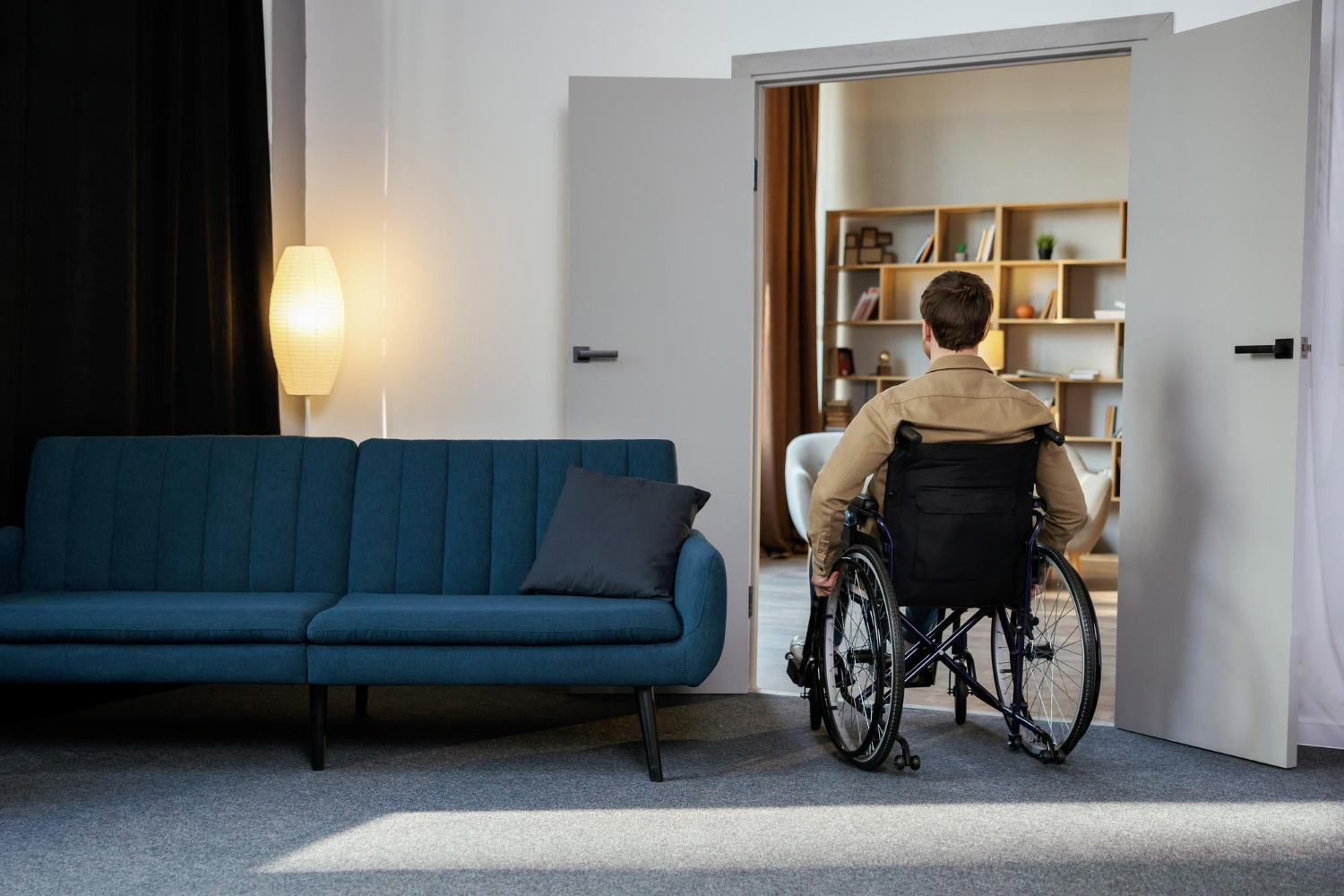
But then came all the changes in the house, and you noticed just how important a home’s layout and how important the way everything is sorted really is. It’s how rooms connect, where things are being stored, what you’re using as storage, how easy the home is to move through, safety – things like that become very important in these situations.
And you don’t usually think about them unless something bad happens.
No denying that home life changed for the family that day.
Everyone took on more responsibility, made more suppers, did chores, and helped Dad with his therapy. We had to adapt the house to help deal with the injury. And we learned most of the things that are causing issues along the way.
Dad did most house things, roof repairs, yard work, going out and picking up wood for the fires, cutting, splitting, and bringing it into the house.
And then you realize that that stack of heavy boxes is suddenly a problem, because there’s no one strong enough to move them. And what would be a 10-minute job becomes a day-long effort. And not only that, but money becomes a problem as well. A child mightn’t understand, but the problem is there. Mom starts working part-time, and while Dad did get workers’ compensation, the future was uncertain.
Would he be able to go back to his job? What will his recovery entail, and how long will it all take?
The unknown factors are the most stressful ones.
Luckily, they didn’t have to make many changes to the house to accommodate his injury, but the healing journey was long, so even the neighbors came over and did snow removal and salting the ice, chopping wood, and carrying it.
The small routines (e.g., how tools are being organized, clearing the walkways, and managing everyday stuff) suddenly became a big part of how the home was arranged.
And while the changes might be subtle, they can quickly add up. Here are a few:
When a workplace injury happens, it’s the victims who have to deal with the various rules and regulations bestowed upon us by the law. And each state might have its own laws.
In a place like Chicago, which follows Illinois law, victims can recover damages as long as they aren’t more than 50% at fault (it’s hard to know how to determine these percentages without help).
Of course, there was an investigation into the accident, and there are so many things that people don’t know in these types of situations. In industrial centers like Chicago, workers’ rights and complex liability laws come into play; it’s necessary to consult a Chicago punch press injury lawyer to go through the legal aftermath.
It’s the clarity that comes from knowing you don’t have to worry about the legal side of things and the financial compensation that might come out of this that’ll determine whether a family will be able to afford all the home adjustments required to make life for the injured person easier.
Also Read: Hidden ADU Construction Costs Homeowners Often Miss!
All in all, Dad made a good recovery, lots of therapy to learn how to use his hand differently, and he was even able to take on the task of building a new garage out back in the coming years.
What stayed is the way we use our home and move through it. It’s the little, subtle changes that were forced upon the family that were recognized to be useful, so they didn’t stop once recovery was completed.
This entire experience is a good example to learn that not all tragedies have to be tragic, and with the proper mindset, support, attitude, and by making meaningful changes throughout your home, you can help overcome any difficulty.
A home layout and the way a home is built and arranged will be the determining factors in how it’ll perform if it becomes a support system for someone. Need ideas that actually work? DeCasa Collections delivers